The 4th World Congress on Education and Research (WCER) serves as a vital global platform for scholars, academic scientists, and industry leaders to exchange cutting-edge insights. Confronting a rapidly changing educational landscape, this year’s congress emphasizes the integration of innovative technologies and transformative teaching methodologies, modern pedagogical challenges, and inclusive learning environments. Attendees will engage in cross-border learning, collaborative networking, and critical dialogues aimed at shaping modern policy and practice.
Congress Dates: April 23-25, 2027 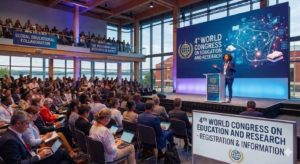
April 25, 2027: Day Trip to the Deer Park Buddhist Center in Madison and a Meditation Session
Venue: Pyle Center, University of Wisconsin–Madison
Abstract Submission Deadline: December 31, 2026
Early Bird Registration Deadline: January 31, 2027
Key Themes
- Digital Transformation & AI in Education: Integrating Artificial Intelligence, virtual/augmented reality (VR/AR), and gamification into teaching methodologies, as well as addressing the digital divide.
- Inclusive & Equitable Education: Special education, multicultural learning, gender equality in schools, and addressing psychosocial and learning barriers.
- Educational Policy & Leadership: Global reforms, internationalization of higher education, institutional management, and the demography of human capital formation.
- Decolonizing Methodologies & Knowledge Ecologies: Fostering indigenous epistemologies and re-evaluating research practices for social transformation.
- Teacher Education & Lifelong Learning: Professional development, adult education, and training modern educators for evolving curricula.
- Bridging the Knowledge Gap: Cross-Disciplinary Research for Social Transformation.
- Shaping Tomorrow: Global Trends, Innovative Pedagogies, and Evidence-Based Policy.
- Resilience in Learning: Education in the Face of Socio-Political and Environmental Violence.
Call for Papers for The 4th World Congress on Education and Research
-
- Generative AI & Pedagogy: Integrating LLMs into curriculum design, automated grading, and personalized learning pathways.
- Ethical AI & Data Governance: Student data privacy, algorithmic bias, and academic integrity policies in the machine-learning era.
- Immersive Technologies: Using Virtual Reality (VR), Augmented Reality (AR), and the metaverse for experiential and technical learning.
- The Digital Divide: Strategies for equitable access to educational technology in low-resource and rural communities.
-
- Climate Literacy: Integrating environmental science, sustainability metrics, and climate anxiety management into standard curricula.
- Green Campus Initiatives: Institutional research on reducing carbon footprints, eco-friendly infrastructure, and sustainable resource management.
- Indigenous Knowledge Systems: Incorporating traditional ecological knowledge into modern science and humanities education.
- Global Civic Engagement: Teaching human rights, conflict resolution, and democratic values in polarized societies.
-
- Neurodiversity & Inclusive Classrooms: Practical evidence-based methods for supporting ADHD, autism, dyslexia, and varied learning paces.
- Universal Design for Learning (UDL): Designing flexible learning environments that accommodate individual learning differences without lowering standards.
- Social-Emotional Learning (SEL): Addressing the youth mental health crisis through curriculum-integrated emotional resilience training.
- Adult & Lifelong Learning: Reskilling and upskilling frameworks for non-traditional students navigating a shifting labor market.
-
- Institutional Economics: Navigating university funding shortages, tuition models, and the rise of public-private partnerships.
- Internationalization: Cross-border research collaborations, student mobility trends, and the geopolitics of global university rankings.
- Quality Assurance & Accreditation: Developing universal metrics for measuring institutional efficacy and student outcomes across borders.
- Academic Freedom: Safeguarding research independence and open discourse amidst political and cultural shifts.
- Bridging Arts and Sciences (STEAM): Case studies on integrating creative arts into core science and math education to boost innovation.
- Mixed-Methods Research Design: Combining big data learning analytics with qualitative classroom ethnographies.
- Translational Research: Turning academic research into actionable public policy and community-based interventions.
- Women and Minorities in STEM: Overcoming systemic barriers to retention, funding, and leadership in scientific fields.
Who Can Participate in the World Congress on Education and Research?
-
- Higher Education Faculty: Professors, lecturers, and researchers sharing empirical studies.
- K-12 Educators: School principals, teachers, and counselors detailing classroom practices.
- Early Career Researchers: Doctoral candidates and postdocs seeking feedback and mentorship.
- Academic Leadership: University presidents, provosts, deans, and department chairs.
-
- Government Officials: Representatives from Ministries of Education and labor departments.
- Policy Analysts: Think-tank researchers evaluating educational systems and reforms.
- Accreditation Boards: Officers setting institutional standards and quality metrics.
-
- NGO Leaders: Directors of non-profits focused on literacy, equity, and access.
- IGOs: Representatives from international bodies like UNESCO, UNICEF, and the World Bank.
- Community Advocates: Leaders championing indigenous knowledge and disability rights.
- EdTech Founders: Entrepreneurs demonstrating AI learning tools and software.
- Corporate Training Directors: Specialists managing workforce reskilling programs.
- Academic Publishers: Editors looking for groundbreaking manuscripts and journal submissions.
Format of Presentations
The conference presentations will only be in oral form. Poster presentations are not a part of the conference.
Paper sessions will consist of four presentations in an 80 minute session. The session will be divided equally between the presentations.
Equipment provided for your presentation
- Video projector with speakers
- HDMI cable and power for laptop connections (it is preferred to bring your OWN LAPTOP)
- Projection screen
- Adaptors for VGA, USB-C, Mini DisplayPort
Conference Proceedings
All accepted abstracts will be published in the Abstract Book with ISBN and selected papers will be sent to peer reviewed, ISI or SCOPUS listed journals.
Registration Rates for Authors/Presenters/Participants from All Countries
-
Authors/Presenters
- Early Bird Registration: USD 590 before January 31st, 2027
- Regular Registration: USD 650 before March 31st, 2027
- Virtual Presenter: USD 325 before March 31st, 2027
Audience
- Participant (Non-Presenter): USD 325 before March 31, 2027
- Virtual Participant (Non-Presenter): USD 200 before March 31, 2027
Submit Abstract at this form or send to editor@research.idpublications.org
URL: www.conference.idpublications.org
Register as a Participant (without presenting your work)
Submit Abstract

Propose and Submit a panel for WCER

Download Congress Brochure in Pdf File

Download Abstract Template for the 4th World Congress